
Aging is inevitable but how fast it shows up, and how deeply it affects your energy, body composition and skin? That part is negotiable.
At Lumea Med Spa in Miami, we work with clients every week who are serious about longevity. They eat well, exercise, prioritize sleep. Yet something still feels off. Energy plateaus. Recovery slows down. The mirror starts telling a different story. When that happens, two of the most powerful tools in advanced wellness come up in nearly every consultation: peptide therapy and hormone replacement therapy (HRT).
These are not the same thing. They work differently, target different systems, and serve different needs. Understanding the distinction and how they can sometimes work together is what helps our clients make smart, personalized decisions instead of guessing.
What Is Peptide Therapy?
Peptides are short chains of amino acids, and the body already produces them naturally. They act as messengers, sending precise signals to cells to perform specific functions from stimulating collagen production to triggering growth hormone release to calming inflammation.
At a clinical level, peptide therapy uses bioidentical or closely analog versions of these natural peptides to support targeted processes. At Lumea Med Spa, we hear it described best by clients themselves: “It feels like my body remembered how to do things it had forgotten.” That’s not a bad way to put it.
Peptide therapy does not replace anything. It signals. It tells your body to produce more of its own beneficial compounds such as growth hormone, collagen, and cellular repair factors by working with your existing physiology rather than overriding it.
Common Peptides Used in Anti-Aging and Wellness
Not all peptides serve the same purpose. The most requested categories in clinical wellness settings include:
- Growth Hormone Secretagogues (GHS): Peptides like CJC-1295 and Ipamorelin encourage the pituitary gland to release more of your own natural growth hormone. Clinical benefits associated with this class include improved body composition, deeper sleep, faster recovery and better skin elasticity.
- Body Composition and Metabolic Peptides: These peptides influence hunger signals, glucose metabolism and fat burning, particularly useful for clients dealing with stubborn visceral fat or metabolic slowdown that lifestyle changes alone cannot resolve.
- Skin and Anti-Aging Peptides: Topical and injectable peptide formulations support collagen and elastin production, skin firmness and tissue repair. Copper peptides and bioactive fragments are among the most studied for visible anti-aging results.
- Tissue Repair Peptides: Compounds in this category support gut integrity, tendon health and recovery from physical stress, making them popular with active clients and athletes.
We at Lumea Med Spa always pair any peptide protocol with thorough lab work and follow a conservative, evidence-informed approach. We only work with compounds that have meaningful data behind them.
What Is Hormone Replacement Therapy (HRT)?
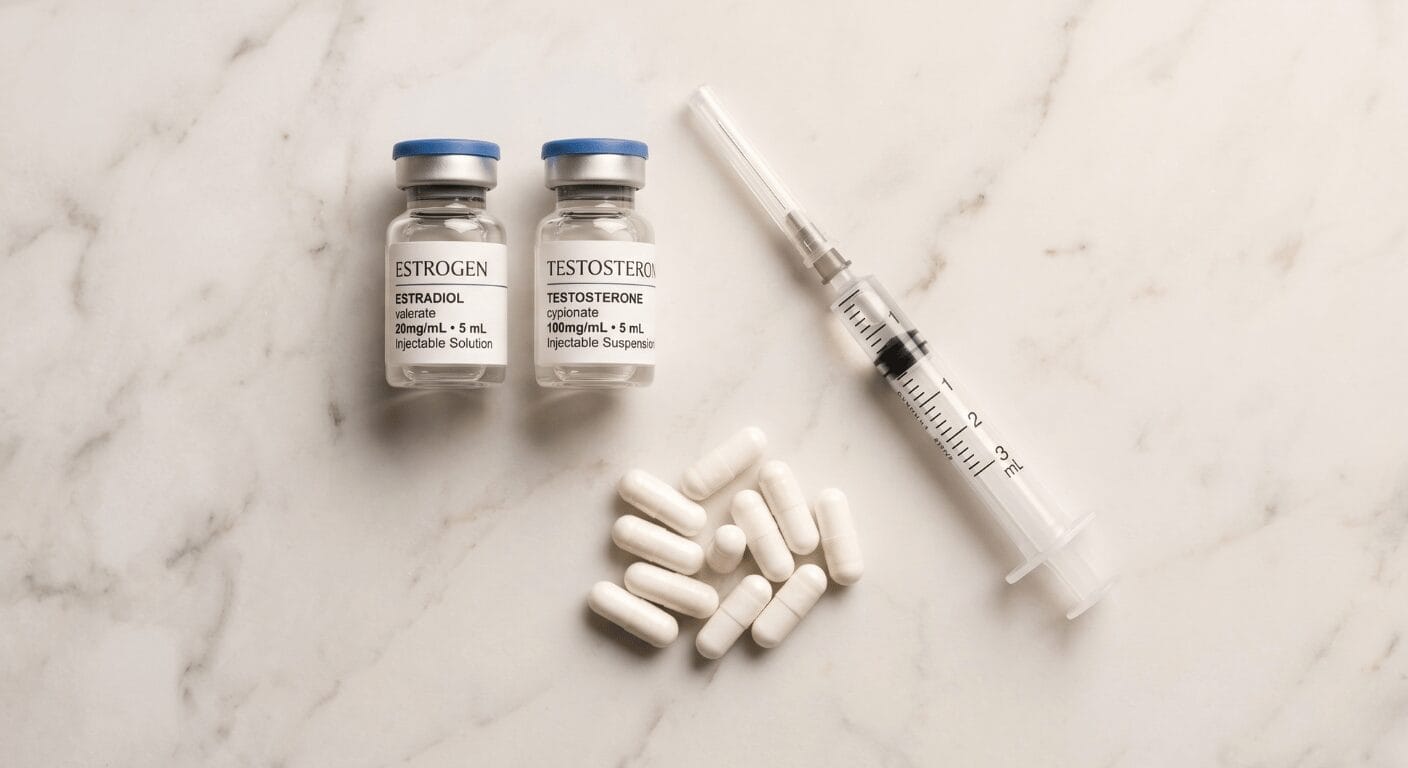
Hormone replacement therapy takes a fundamentally different approach. Rather than signaling the body to produce more of its own hormones, HRT directly replenishes hormones that have declined or disappeared entirely due to aging, menopause, andropause or other hormonal shifts.
For women, this typically involves estrogen, progesterone and sometimes testosterone. For men, testosterone replacement is the most common form of HRT. In some protocols, DHEA and human growth hormone are also included.
Think of HRT this way: if peptide therapy turns up the volume on your body’s own production, HRT steps in with a replacement when production has genuinely dropped below the threshold where lifestyle and signaling alone can compensate.
What HRT Addresses
HRT directly targets the downstream effects of declining hormone levels. Clinical benefits are well-documented and include:
- Skin hydration and collagen support: Estrogen plays a direct role in collagen production. When hormone levels drop after menopause, skin becomes thinner, drier and more prone to wrinkles. HRT has been shown to slow this process and restore some of that firmness.
- Energy and muscle mass: Testosterone plays a critical role in both men and women for energy, lean muscle and metabolic rate. Low T in men is directly linked to fatigue, reduced performance and difficulty maintaining muscle tone. HRT can restore these levels and the vitality that comes with them.
- Bone density: Estrogen protects bone density. HRT is one of the most effective tools for preventing osteoporosis in postmenopausal women, especially when hormones decline before the age of 45.
- Libido and sexual health: Hormonal imbalances are a leading cause of reduced sex drive in both genders. HRT addresses this directly, often delivering results that feel transformative for clients who had written it off as just part of aging.
- Mood and cognitive clarity: Brain fog, anxiety and emotional flatness often track directly with hormonal decline. Restoring optimal levels can sharpen mental clarity and stabilize mood in meaningful ways.
Understanding HRT Risks
HRT is a powerful tool, but it demands individualized assessment. Blanket recommendations do not serve anyone well here. Potential risks, particularly with combined estrogen-progestin therapy over long durations, include a slightly elevated risk of certain breast cancers, blood clots, stroke and gallbladder disease in some women.
For men, HRT side effects can include acne, fluid retention, shifts in red blood cell count, and in some cases, testicular atrophy from exogenous testosterone suppressing natural production.
The key word in any HRT conversation is “individualized.” At Lumea Med Spa, we assess lab work, personal and family history, and health goals before recommending any hormone protocol. The risk profile changes dramatically based on dosing, delivery method, age, timing and clinical oversight.
Peptide Therapy vs HRT: Side-By-Side Comparison
Understanding both therapies requires looking at them across the dimensions that matter most to clients making a real decision:
- Mechanism: Peptide therapy stimulates the body’s own production of hormones and cellular repair compounds. HRT directly replaces hormones that have declined to deficient levels.
- Specificity: Peptides are highly targeted as they activate specific receptors and pathways. HRT creates broader systemic hormonal shifts across multiple tissues and organ systems.
- Onset of Results: Peptide results tend to build gradually over weeks to months as natural processes are upregulated. HRT often delivers more immediate symptom relief, particularly for menopausal symptoms like hot flashes, sleep disruption and mood instability.
- Risk Profile: Peptides generally carry a favorable safety profile with few side effects when properly sourced and dosed. HRT carries more variable risk depending on the hormone type, delivery method and duration of use.
- Reversibility: Peptide therapy is more easily titrated or stopped without significant withdrawal effects. HRT creates physiological dependence as the body adjusts to exogenous hormones and can struggle when they are discontinued abruptly.
- Candidacy: Peptide therapy suits clients who still have functional hormonal output but want to optimize it. HRT is more appropriate when hormonal levels have genuinely declined to ranges that affect quality of life and cannot be recovered through natural stimulation.
Who Is Each Therapy Best For?
Ideal Candidates for Peptide Therapy
Peptide therapy tends to serve clients who are:
- Active professionals in their 30s and 40s who feel stuck despite doing everything right, exercising consistently, eating well, but still struggling with body composition, energy or recovery.
- Perimenopausal women who want added support for lean muscle preservation, skin firmness and sleep quality, either alongside or ahead of HRT.
- Men experiencing early signs of androgen decline who want to optimize growth hormone pulsatility, metabolism and recovery without committing to full testosterone replacement.
- Longevity-focused clients who want a sustainable, integrative approach to aging that works with their body’s own biology.
Ideal Candidates for HRT
HRT tends to be the stronger choice for clients who are:
- Postmenopausal women with confirmed estrogen and progesterone deficiency showing clear clinical symptoms such as hot flashes, bone density loss, vaginal dryness and mood disruption.
- Men with clinically confirmed low testosterone (typically below 300 ng/dL) who experience significant fatigue, muscle loss, cognitive decline and reduced libido. Learn more about our testosterone replacement therapy in Miami.
- Clients who have tried lifestyle optimization but remain symptomatic, where a direct hormonal deficiency is confirmed through labs.
- Those who need rapid symptom relief, where the gradual, cumulative nature of peptide therapy is not sufficient to address the severity of their decline.
The Case for Combining Both
Here is something clients are often surprised to hear: peptide therapy and HRT are not competitors. For many of our clients at Lumea Med Spa, the most effective approach combines both because they target different but complementary mechanisms.
HRT restores what is missing. It brings hormone levels back into optimal ranges, creating the biochemical foundation for everything else to work properly.
Peptide therapy builds on that foundation. When hormones are balanced, peptides can more effectively stimulate growth hormone release, support cellular repair, drive collagen production and improve metabolic efficiency. For clients also exploring medical weight loss in Miami, combining both therapies often accelerates results significantly.
Growth hormone-releasing peptides like CJC-1295 and Ipamorelin, used alongside testosterone or estrogen replacement, create an environment where muscle recovery is faster, fat metabolism is more efficient, sleep is deeper and skin aging slows more visibly. The two therapies amplify each other when used intelligently under medical supervision.
Research and clinical experience both point toward the same conclusion: combining these therapies under proper supervision leads to more comprehensive, sustainable results than either approach alone. Many clients also find that pairing this internal optimization with aesthetic treatments like Morpheus8 or laser resurfacing delivers even more visible anti-aging outcomes.
What to Expect From Each Therapy at Lumea Med Spa
Your Peptide Therapy Journey
Every peptide protocol at Lumea Med Spa starts with a detailed health assessment and lab work. We do not recommend peptides based on symptoms alone as we need to understand your baseline biology.
Once we identify the right peptides for your goals, administration is typically subcutaneous injection (some peptides are available in oral or topical forms). We provide full instruction so clients feel confident managing this at home between visits.
Results typically build over four to twelve weeks. Clients often notice improved sleep quality first, followed by changes in body composition, energy and eventually skin quality. We schedule follow-up labs and consultations to track progress and adjust protocols.
Your HRT Journey
HRT begins the same way, with comprehensive labs measuring estradiol, progesterone, testosterone (free and total), DHEA, thyroid function and other relevant markers.
Based on your results and symptom picture, we design a protocol using bioidentical hormones wherever possible. Delivery options include topical creams, patches, subcutaneous pellets and injections, depending on which option best suits your lifestyle and clinical needs.
Many clients notice meaningful relief from acute symptoms within four to eight weeks. Full optimization, including body composition, cognitive function and skin changes, often takes three to six months of consistent therapy and monitoring. Clients pursuing men’s sexual health goals alongside HRT may also benefit from exploring our erectile dysfunction treatment options in Miami.
Why Medical Supervision Is Non-Negotiable
Both peptide therapy and HRT carry significant power and that power demands accountability. Self-administered, unsupervised hormone or peptide protocols carry real risks: dosing errors, substandard compound quality, missed contraindications and hormone imbalances that create new problems.
At Lumea Med Spa, every protocol is physician-informed, lab-backed and monitored with regular follow-up. We source peptides from reputable compounding pharmacies that provide quality and purity documentation. HRT protocols are designed to minimize risk while maximizing benefit, which means we do not take a one-size-fits-all approach to any of it.
The difference between a protocol that transforms someone’s quality of life and one that creates problems often comes down to the quality of oversight behind it. For those curious about how IV therapy in Miami can complement your peptide or hormone protocol with targeted micronutrient support, our wellness team can walk you through the options.
Making the Right Choice for You

The right anti-aging path is not universal as it is personal. Some clients come to us needing HRT urgently because their hormone levels have dropped to ranges that significantly affect their quality of life. Others are better served by peptide therapy as a first-line optimization tool that keeps their biology running at its best. Many benefit most from both.
What we consistently find is this: the clients who get the best outcomes are the ones who commit to understanding their own biology through labs, work with a qualified clinical team, and approach this as a long-term wellness investment rather than a quick fix.
At Lumea Med Spa, we help guide that decision every step of the way. If you’re in Miami and ready to have a serious conversation about your anti-aging options, whether that’s peptide therapy, HRT or a combination of both, we are here for it.

