

By age 25, your body has already started producing less collagen, roughly 1% less every year. Most of us do not notice it immediately. But by our 30s and 40s, that quiet, cumulative decline shows up on our faces as fine lines we did not expect to see so soon.
The truth is, fine lines are not simply about aging. They are the result of a combination of biological shifts, lifestyle patterns, and environmental exposures, many of which begin far earlier than most people realize. And while the skincare industry has conditioned us to reach for a new serum every time we spot a new crease, the reality is that topical products can only do so much.
At Lumea Med Spa in Miami, we see clients across every age group, from people in their early 20s concerned about early crow’s feet to women in their 50s who want to reverse years of sun exposure. What we have found, consistently, is that the most effective approach to fine lines is one that is tailored to age, skin biology, and treatment tier. This blog post walks through exactly that.
What Fine Lines Actually Are and Why They Form

Before we get into age specific causes and treatments, we need to establish the baseline. Fine lines are shallow creases that form when the skin loses its ability to bounce back after repeated folding. They are the early stage of what eventually deepens into wrinkles.
Two proteins make your skin resilient: collagen and elastin. Collagen provides structural support, and elastin gives skin the flexibility to snap back into shape. As collagen synthesis declines by 1% to 1.5% annually with age, the scaffolding beneath your skin gets thinner and less supportive. Elastin fibers weaken in parallel. The result is skin that folds more easily and recovers more slowly.
Fine lines tend to appear first where the skin is thinnest and muscle activity is highest, around the eyes, forehead, between the brows, and around the mouth. These are the zones that move hundreds of times a day with every expression we make.
Fine Lines in Your 20s: Causes and What to Do
Why Fine Lines Show Up Earlier Than You Think
Most people are surprised to see fine lines before 30. The reality is that UV damage, dehydration, and repetitive muscle movement can accelerate the process well ahead of schedule. Unprotected sun exposure alone accounts for approximately 80% of all visible signs of skin aging, and much of that damage accumulates silently during your 20s, long before it surfaces as a visible line.
Dynamic fine lines are the first to appear in this decade. These are the ones caused by repetitive facial expressions, squinting in sunlight, furrowing your brow, and smiling broadly. They show up while you are moving, then fade when your face relaxes. At this stage, the skin still has enough elasticity to recover fully, but the repeated creasing is setting the stage for permanent lines if left unaddressed.
Skincare Tier: Build the Foundation Now

In your 20s, prevention is the most powerful tool you have. A consistent daily routine built around four core ingredients will go further than any treatment later:
- Broad spectrum SPF 30 or higher: Every single morning, regardless of season or cloud cover.
- Vitamin C serum in the morning: Neutralizes free radicals from UV and pollution exposure.
- Retinol at night: Encourages cell turnover and supports collagen synthesis. Start 2 to 3 nights per week to allow skin to adjust.
- Hyaluronic acid: Draws moisture into the skin, temporarily plumping fine lines and maintaining hydration levels.
Consistency matters more than complexity here. A routine you follow every day will outperform an elaborate 12 step process you abandon after two weeks.
Clinical Tier: Preventative Botox and Microneedling
For clients in their late 20s who want to get ahead of dynamic lines, preventative Botox is a clinically smart move. At Lumea, we use small, precise doses of neuromodulator in areas like the forehead, crow’s feet, and the 11s between the brows. Botox works by temporarily blocking the nerve signals that trigger muscle contractions. With less muscle movement, the skin folds less, and lines do not deepen.
SkinPen microneedling is another excellent early intervention. By creating controlled micro channels in the skin, SkinPen stimulates the skin’s natural repair response, triggering collagen and elastin production in the dermis. For people in their 20s, this is a proactive way to reinforce skin density before significant loss begins.
Fine Lines in Your 30s: When the Biology Shifts
Collagen Loss Becomes Measurable
The 30s are when most clients first walk into Lumea describing changes they can actually feel, not just see. Skin feels less bouncy in the morning. Foundation settles into lines around the nose and mouth that were not there before. Eye area creases do not disappear when you are not smiling anymore.
This happens because collagen production has been declining for a decade, and the cumulative loss is now visible. Skin in your 30s also produces less hyaluronic acid, the molecule responsible for holding water in the tissue, which means skin holds hydration less effectively. The result is a combination of surface dryness and structural thinning that makes fine lines appear more pronounced.
Volume loss begins subtly in the cheeks and temples during this decade as well. This hollowing effect creates gravitational fine lines, creases and folds that form not from muscle movement alone but from the skin having less support beneath it.
Lifestyle Factors That Accelerate the Process
Several lifestyle habits magnify the biological changes of your 30s:
- Chronic sleep deprivation: Skin repairs itself during deep sleep, and cortisol, a stress hormone elevated by poor sleep, actively breaks down collagen.
- High glycemic diets: Sugar molecules bind to collagen fibers through a process called glycation, making them stiff and more prone to breaking down.
- Dehydration: Even mild dehydration makes fine lines appear more visible immediately and impairs skin repair mechanisms over time.
- Smoking: Tobacco smoke generates enormous amounts of free radicals that attack collagen and elastin directly, while also constricting blood vessels that deliver oxygen and nutrients to skin cells.
None of these are dramatic lifestyle failures. They are the patterns that accumulate quietly, and they compound the biological decline already underway.
Treatment Tier: Combining Skincare with Clinical Intervention
Skincare in your 30s needs to work harder. Upgrade your retinol to a prescription strength retinoid if your skin tolerates it. Add peptides, short chains of amino acids that signal cells to produce more collagen, to your nightly routine. Peptides are gentler than retinoids and work synergistically alongside them.
At the clinical level, this is the decade to start a structured treatment plan. At Lumea, our recommendation for clients in their 30s typically includes:
- Regular Botox every 3 to 6 months to prevent dynamic lines from deepening.
- A series of SkinPen microneedling sessions to address emerging texture and early fine lines.
- Chemical peels using glycolic acid or lactic acid to stimulate collagen, remove surface damage, and improve the absorption of skincare products.
- Peptide therapy to support collagen production and skin repair from within.
Chemical peels at Lumea use solutions like glycolic acid, lactic acid, and salicylic acid that penetrate the skin’s outer layers, doing more than just removing dead cells. They actively stimulate collagen and improve overall skin tone and texture.
Fine Lines in Your 40s and Beyond: When Structural Change Requires Structural Treatment
What Changes After 40
By the 40s, the nature of the problem shifts. What began as surface level fine lines has often progressed into deeper creases, more pronounced nasolabial folds, and visible laxity, particularly along the jawline and under the eyes. Estrogen levels decline through perimenopause, which accelerates collagen loss further. Skin becomes thinner, drier, and less able to retain moisture on its own.
Fat pads in the face, which provide natural volume and support, begin to atrophy and descend. This gravitational redistribution means that the cheeks look flatter, the undereye area appears more hollow, and lines along the lower face become more defined. Elastin fibers are also significantly reduced by this point, so skin does not recover its shape as readily.
The key distinction for this decade is that topical skincare, while still essential, cannot reverse structural changes. No serum rebuilds fat volume. No cream retightens a loose jawline. Clinical intervention becomes not just an enhancement option but a clinical necessity for meaningful results.
The Treatments That Deliver Real Results in Your 40s
This is where Lumea’s clinical approach becomes most comprehensive. We use a tiered combination strategy rather than a one size fits all approach:
Morpheus8: RF Microneedling for Deep Remodeling

Morpheus8 is one of our most transformative treatments for clients in their 40s and beyond. It combines microneedling with fractional radiofrequency energy, which means it does not just trigger surface collagen, it penetrates deep into the dermis to heat and remodel tissue from within. The RF energy coagulates fat in the sub dermal layer and tightens loose tissue, while the microneedling channels initiate a collagen cascade in the deeper layers of skin.
The clinical result is smoother texture, reduced fine lines, and improved firmness, without surgery and with very manageable downtime. Morpheus8 targets skin laxity, texture, and fine lines simultaneously, making it one of the few devices capable of addressing multiple aging concerns in a single session.
Botox and Neuromodulators: Still Essential

Botox does not stop being relevant in your 40s. If anything, consistent neuromodulator treatments during this decade prevent dynamic lines from deepening further while structural treatments like Morpheus8 work on the underlying skin quality. At Lumea, we treat forehead lines, crow’s feet, frown lines, and even offer brow lifting effects with strategic Botox placement.
Laser Resurfacing
For more pronounced wrinkles, significant sun damage, or deeper texture changes, laser resurfacing penetrates into the deeper layers of the skin, making it ideal for treating pronounced wrinkles, deep acne scars, and more significant skin concerns. It works by stimulating a controlled wound healing response that generates substantial new collagen.
Dermal Fillers
Dermal fillers restore volume to areas where fat pad atrophy has created hollowing and sagging. When used thoughtfully alongside Botox and energy based treatments, fillers complete the three dimensional picture, restoring what age has diminished rather than simply smoothing the surface.
The Lifestyle Factors Affecting Fine Lines at Every Age
Sun Exposure: The Biggest Accelerator

The single most impactful thing you can do for fine line prevention at any age is consistent daily sunscreen use. Broad spectrum SPF 30 or higher applied every morning, rain or shine, significantly slows the rate of UV induced collagen breakdown. UV radiation generates free radicals that attack collagen and elastin directly, and this damage accumulates even on cloudy days and through windows.
Sleep, Stress, and Skin Repair
Skin does its heaviest repair work during deep sleep. Cell turnover accelerates, growth factors are released, and collagen synthesis ramps up. Consistently getting fewer than seven hours interrupts this process. Chronic stress elevates cortisol, which has a documented catabolic effect on collagen. Managing sleep hygiene and stress levels is not just general wellness advice, it directly affects your skin’s structural integrity.
Hydration and Diet
Dehydrated skin shows fine lines more readily because the tissue literally shrinks slightly when water levels drop, making surface creases more visible. Beyond topical hydration, internal hydration matters just as much. A diet rich in antioxidants, such as berries, leafy greens, and fatty fish, helps neutralize the free radical damage that breaks down collagen. Limiting sugar intake reduces glycation, the process through which sugar molecules bond to and degrade collagen fibers.
Sleep Position and Facial Habits
Sleeping on your side or stomach presses your face into a pillow for hours each night, creating compression fine lines that compound over time. A silk pillowcase reduces friction and is a small but practical upgrade. Similarly, UV protective sunglasses reduce squinting, one of the most repetitive muscle movements that drives crow’s feet formation.
Lumea’s Clinical Recommendation Framework for Fine Lines
At Lumea Med Spa in Miami, we do not take a product first or single treatment approach to fine lines. Our recommendation framework is built around three principles: understanding where the client is in their skin aging journey, identifying whether the concern is primarily dynamic, structural, or surface level, and building a tiered plan that combines appropriate treatments in the right sequence.

Here is a simplified overview of how we approach fine line treatment by decade:
| Age Group | Primary Driver | Skincare Tier | Clinical Tier |
|---|---|---|---|
| 20s | Dynamic lines, UV damage | SPF, Vitamin C, Retinol | Preventative Botox, SkinPen Microneedling |
| 30s | Collagen decline, early volume loss | Retinoid upgrade, Peptides | Regular Botox, Microneedling series, Chemical Peels |
| 40s+ | Structural loss, laxity, deep lines | Prescription retinoid, intensive hydration | Morpheus8, Botox, Laser Resurfacing, Dermal Fillers |
What we know from working with clients across age groups is that the earlier someone begins a structured approach, the more options they have and the less aggressive those options need to be. Prevention is always less intensive, and less costly, than correction.
What Skincare Products Cannot Fix
We want to be direct here because the skincare industry often is not. Over the counter products, even the ones with legitimate active ingredients like retinol, peptides, and hyaluronic acid, work at the level of the epidermis and superficial dermis. They can improve hydration, increase cell turnover, mildly stimulate collagen at the surface, and make fine lines look less visible. That is genuinely useful.
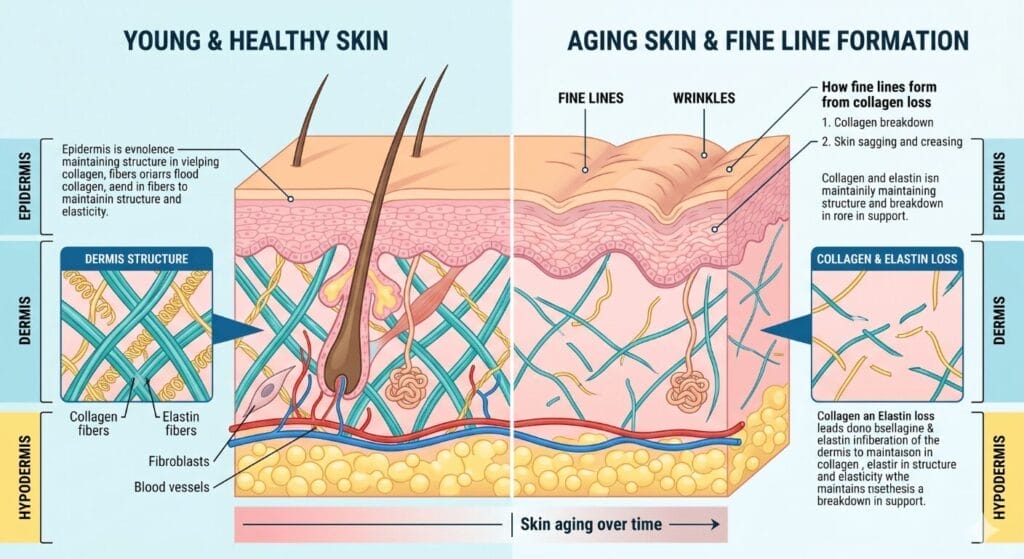
What topical products cannot do is rebuild collagen in the deeper dermis, restore lost facial volume, retighten tissue that has become lax, or reverse years of UV related structural damage. If a product claims to do those things, the claim is not supported by clinical evidence.
This is not a reason to abandon skincare. It is a reason to have accurate expectations about what each tier of intervention can accomplish. Skincare maintains and supports. Clinical treatments address structural change. At Lumea, we help clients understand that distinction clearly so they can make informed, effective decisions about their time and money.
Why Lumea? Our Approach to Treating Fine Lines in Miami
Lumea Med Spa brings together the clinical depth of a medical practice with an environment that feels genuinely welcoming rather than intimidating. We are located in Miami, where year round UV exposure, humidity, and an active lifestyle all create specific skin challenges, particularly around premature fine lines and sun related collagen loss.
Our team takes a full picture approach, understanding your skin history, your lifestyle, your goals, and your timeline before recommending any treatment. We offer the full spectrum, from preventative Botox and SkinPen microneedling to Morpheus8 RF, laser resurfacing, chemical peels, peptide therapy, and dermal fillers, so whatever stage you are at, there is a precise, evidence based plan available.
If you have been noticing fine lines and want to understand what is actually driving them and what will actually address them, we would love to consult with you. Call us today to book a consultation.

